

zkML for Confidential AI Inference: Protecting Prompts and Models in 2026

In 2026, AI inference has become the backbone of decision-making across industries, from diagnosing diseases to optimizing financial portfolios. Yet, this power comes with profound risks: exposing user prompts or proprietary models can lead to data breaches, intellectual property theft, or biased manipulations. Enter zkML confidential AI, a technology that verifies computations without revealing underlying data. As someone who has tracked macro trends for nearly two decades, I view zkML not as hype, but as a conservative bulwark against the vulnerabilities plaguing open inference services.

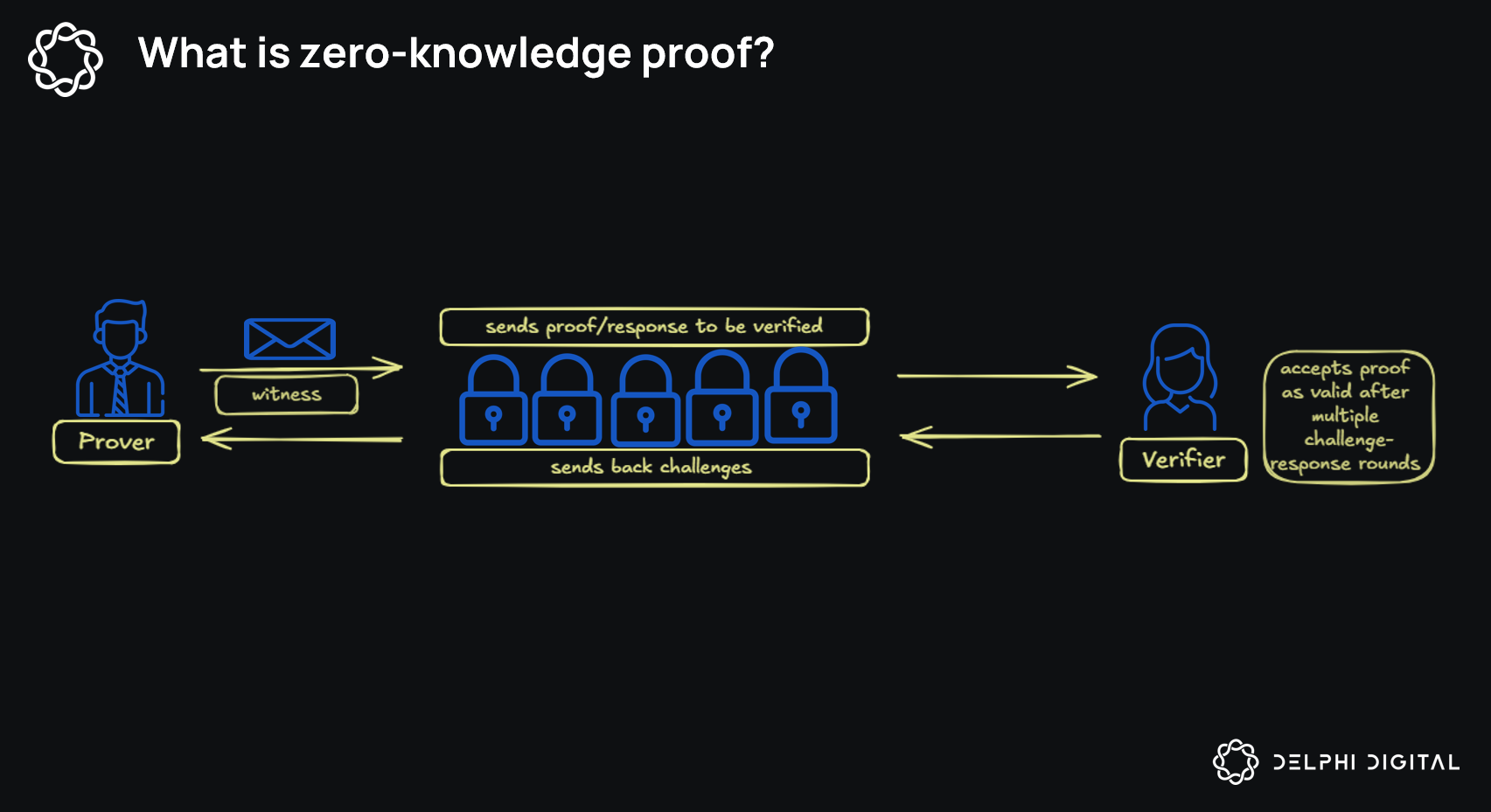
Traditional AI deployments often force a choice between utility and secrecy. Cloud providers handle vast troves of sensitive inputs, yet operators could theoretically access runtime memory. Models trained on confidential datasets risk reverse-engineering. Private AI inference zkML resolves this by leveraging zero-knowledge proofs; provers demonstrate correct execution while hiding prompts, weights, and intermediates. This shift matters deeply in high-stakes fields like healthcare, where patient records demand ironclad protection, or DeFi, where on-chain predictions must evade front-running.
The Imperative for Protecting Prompts in Real-Time Inference
Consider a physician querying an AI for a diagnosis based on genomic data. The prompt contains personal health history; the model, years of proprietary research. Without safeguards, inference leaks both. zkML flips the script: the prover generates a succinct proof attesting to the model’s faithful run on encrypted inputs. Verifiers confirm outputs without seeing the black box interior. Recent progress, including GPU-accelerated proving, has slashed latency from hours to seconds, making this viable for interactive applications.
This prompt protection extends to consumer tools. Large language models now serve personalized advice, but users hesitate when queries reveal trade secrets or private thoughts. Zero knowledge ML prompts ensure confidentiality, fostering trust. In my analysis of long-cycle trends, such mechanisms underpin sustainable AI adoption, avoiding the regulatory backlash that speculative deployments invite.
Safeguarding Model Integrity Against Theft and Tampering
Models represent immense value; a fine-tuned GPT variant or vision transformer embodies curated data and compute. Exposing weights invites cloning or poisoning attacks. ZKML model privacy 2026 treats parameters as sacred, proving inference correctness sans disclosure. Frameworks like Jolt Atlas optimize this via efficient lookup arguments, handling state-of-the-art networks from distilled GPT-2 to convolutional behemoths.
Phala’s solutions exemplify this: hardware isolation pairs with end-to-end encryption, barring even vendors from memory snapshots. Operators verify LLM outputs privately, scaling to production loads. I appreciate this conservatism; it prioritizes verifiable compute over flashy decentralization, aligning with enduring privacy needs in commodities forecasting or bond yield predictions.
Overcoming Scalability Hurdles with Hybrid Innovations
Early zkML faced skepticism over overhead; proofs ballooned circuits, stalling adoption. By 2026, distributed proving and hardware tweaks have tamed this. Fusion with fully homomorphic encryption adds layers: compute on ciphertexts, then zk-prove results. This confidential compute zkML stack suits blockchain oracles, where DeFi protocols ingest AI signals without trusting intermediaries.
In practice, vision models now prove in minutes, text generators in under ten. For macroeconomic modeling, where I focus, zkML secures fundamental analysis; verify bond pricing models on private yield curves without exposing strategies. These strides, drawn from arXiv breakthroughs and industry deployments, signal maturity. Yet, thoughtfully, we must weigh proof sizes against bandwidth in edge devices, ensuring broad accessibility.
Building on these optimizations demands rigorous evaluation in live environments. Healthcare providers, for instance, deploy zkML to process encrypted scans through vision models, yielding diagnoses backed by proofs. No patient data escapes; no model weights leak. Finance echoes this: portfolio optimizers ingest confidential positions, outputting allocations verifiable on-chain. Such applications underscore zkML’s role as a foundational layer for private AI inference zkml.
Healthcare case: a zkML system analyzes genomic sequences for rare disease risks. The proof attests to model fidelity on private inputs, enabling insurers to price policies blindly. Finance parallel: bond traders protect yield curve models, proving inferences amid macroeconomic volatility. These aren’t theoretical; 2026 deployments, per industry reports, handle production-scale queries with sub-minute proofs.
Blockchain integration amplifies this. zkML serves as middleware, piping confidential signals to smart contracts. DeFi platforms execute trades on proven AI outputs, sidestepping oracle manipulations. Worldcoin’s zkML resources highlight open-source tools accelerating this convergence, from SNARK circuits for GPT variants to lookup-optimized transformers.
Navigating Remaining Challenges Thoughtfully
Scalability advances notwithstanding, proof storage poses bandwidth hurdles for mobile inference. Edge devices benefit from recursive proofs, aggregating small verifications into succinct aggregates. Cost remains: GPU clusters dominate proving, though distributed networks democratize this. My conservative lens urges hybrid paths; pair zkML with selective disclosure for non-sensitive paths, preserving full confidentiality where stakes peak.
Comparison of zkML Frameworks
| Framework | Proof Time (seconds) | Model Support (LLMs/Vision) | Use Case (Healthcare/DeFi) |
|---|---|---|---|
| Jolt Atlas | 1.8 | ✅ LLMs, ✅ Vision | ✅ Healthcare, ✅ DeFi |
| Phala | 12 | ✅ LLMs | ✅ Healthcare, ✅ DeFi |
| EZKL | 4.5 | ✅ LLMs, ✅ Vision | ✅ Healthcare, ✅ DeFi |
Regulatory tailwinds favor zkML. As AI faces scrutiny over data monopolies, zero-knowledge compliance emerges as a differentiator. Europe’s stringent rules and U. S. executive orders prioritize privacy-preserving tech, positioning zkML ahead of opaque alternatives.
Fusion with FHE merits note: encrypt inputs homomorphically, infer, then zk-prove. This end-to-end shield suits ultra-sensitive realms like defense analytics. Yet, overheads demand judicious use; zkML alone often suffices for inference-dominant workflows.
The Long-Cycle Promise of zkML in Macro Trends
Over 18 years observing cycles, I see zkML fortifying AI’s durability. Commodities forecasters shield harvest models from competitors; bond desks verify duration calculations privately. This enables sustainable growth, unmarred by breaches eroding confidence. By 2026, zkML transitions from experiment to infrastructure, much like encryption did for web commerce.
Developers access GitHub troves and ACM frameworks, prototyping verifiable vision or text models swiftly. Communities like Ethereum Malaysia emphasize blockchain synergy, unlocking decentralized AI economies. Thoughtfully applied, zkml model privacy 2026 and zero knowledge ml prompts mitigate risks inherent to powerful inference.
As adoption scales, expect zkML to underpin confidential compute ecosystems. From personalized medicine to autonomous agents, it ensures AI serves without subverting privacy. In a landscape of fleeting trends, this technology endures, rewarding patient builders over speculators.