

zkML Privacy-Preserving AI Training on Sensitive Data Without Raw Access

In an era where privacy-preserving machine learning is no longer optional but essential, particularly for sectors handling sensitive financial and health data, zkML emerges as a conservative yet transformative approach. Traditional AI training demands raw access to datasets, exposing proprietary information to breaches or misuse. zkML, or zero-knowledge machine learning, flips this paradigm by allowing models to learn from encrypted data without ever decrypting it, verifying computations cryptographically while keeping secrets intact. This isn’t hype; it’s a data-driven necessity for long-term stability in AI-driven fundamental analysis.

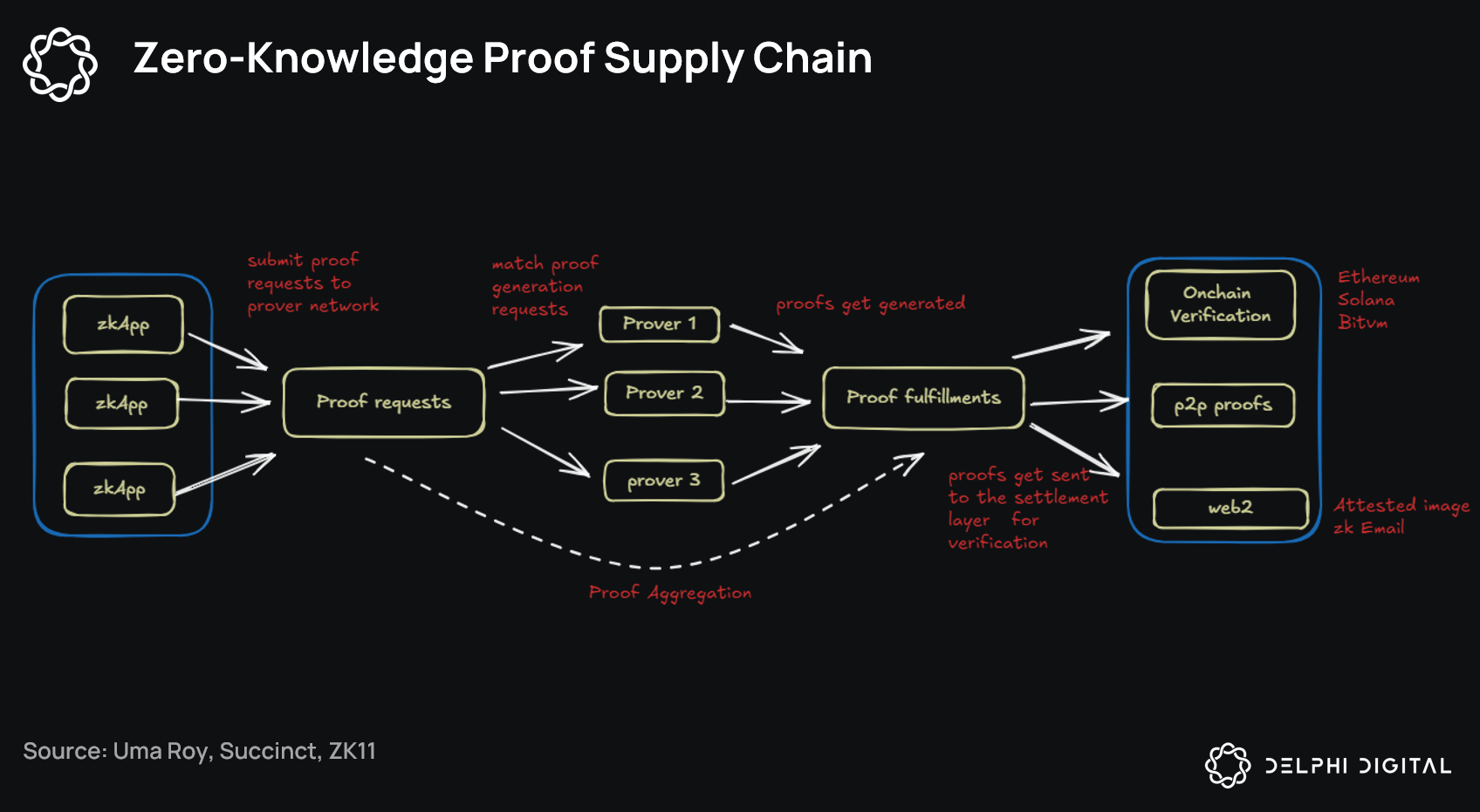
Consider the financial analyst poring over confidential portfolios or transaction histories. Sharing such data for model training risks regulatory violations and competitive disadvantage. zkML addresses this through zero knowledge proofs AI models, where a prover demonstrates correct execution of ML algorithms – from gradient descent to inference – without revealing inputs. Succinct non-interactive arguments of knowledge (SNARKs) make proofs compact and efficient, ideal for decentralized verification.
Foundational Mechanics of zkML for Confidential AI Training
At its core, zkML converts ML operations into arithmetic circuits compatible with ZKP systems. Weights, activations, and even neural network layers become provable computations. For instance, during zkML private data training, data owners encrypt inputs using homomorphic schemes or commit them via Merkle trees, then generate proofs attesting to model updates without exposure. This conservative method prioritizes verifiability over speed, ensuring auditors or regulators can confirm integrity remotely.
Comparison of zkML vs. Differential Privacy
| Aspect | zkML | Differential Privacy |
|---|---|---|
| Privacy Guarantee | Perfect confidentiality & soundness 🔒✅ | Probabilistic with noise 🎲⚠️ |
| Accuracy Impact | None ✅ | Erodes due to noise addition 📉 |
| Verifiability | Remote proof verification without data access 📡🔐 | Statistical audits 📊 |
| Use Case Fit | Sensitive data training 🏥💼 | General anonymization 🌍 |
Unlike differential privacy, which adds noise and erodes accuracy, zkML offers perfect confidentiality with perfect soundness. Provers can’t fake results; verifiers gain assurance without trust. In my experience managing privacy-focused portfolios, this aligns with value investing principles: low-risk, high-certainty outcomes. Yet, computational overhead remains a hurdle, demanding optimized provers like those in recent GitHub projects optimizing ZK-SNARKs for ML inference.
Navigating Scalability Challenges in Secure ML Without Data Access
Early zkML implementations struggled with proving deep networks due to circuit bloat. Modern advancements, such as lookup arguments in PlonK variants, compress proofs dramatically. The Artemis framework exemplifies this, introducing commit-and-prove SNARKs for efficient zkML, enabling trustless deep learning with minimal latency. Healthcare applications shine here: zkFL-Health merges federated learning, ZKPs, and trusted execution environments for collaborative medical AI, letting hospitals train on patient data collectively yet privately.

Financially, imagine training fraud detection models across banks without centralizing transaction logs. zkML’s confidential AI training zkML protocols ensure no raw data leaves silos, verified on-chain for decentralized finance. Atoma Network’s confidential computing layer further bolsters this, securing models in untrusted nodes via hardware enclaves. These integrations signal maturity, but conservative adopters must weigh proof generation costs against privacy premiums – currently viable for high-stakes, low-volume training.
Real-World Implications for Privacy-Centric Industries
From Kudelski Security’s verifiable ML to Cloud Security Alliance’s emphasis on ZKP model training, consensus builds around zkML’s role in accountable AI. In finance, where I specialize, zkML secures alpha-generating models trained on proprietary earnings data, preventing leaks that could swing portfolios. Healthcare benefits similarly, with verifiably correct diagnostics from pooled anonymized records. Reddit discussions and arXiv papers underscore practical workflows: Python libraries now prototype zkML pipelines, democratizing access for data scientists wary of data silos.
Aleo’s initiative and Epicenter podcasts highlight commercial traction, positioning zkML as programmable privacy infrastructure. Yet, as a CFA charterholder, I caution: scalability must prove itself in production before allocating resources. Recent openreview and arXiv works on efficient SNARKs and hybrid TEE-ZKP systems suggest momentum, paving the way for broader privacy preserving machine learning adoption without compromising analytical rigor.
These developments aren’t speculative; they represent measured progress toward secure ML without data access. For portfolio managers like myself, zkML enables rigorous backtesting on historical trades without vendor lock-in or data exposure risks. Tools from GitHub repositories, such as ZKML inference optimizers, now support recurrent neural networks, broadening applicability to time-series forecasting in bonds and equities.
Comparison of Leading zkML Frameworks
| Framework | Primary Focus | Key Technologies | Applications | Reference |
|---|---|---|---|---|
| Artemis | Efficient SNARKs for deep learning | Commit-and-prove SNARKs with advanced lookup features | Large-scale, trustless deep learning inference | [openreview.net](https://openreview.net/pdf?id=xCy3mqWccy) |
| zkFL-Health | Federated learning with ZKPs for healthcare | Zero-knowledge proofs (ZKPs) + Trusted Execution Environments (TEEs) | Collaborative training of medical AI models without exposing patient data | [arxiv.org](https://arxiv.org/abs/2512.21048) |
| Atoma Network | Confidential computing for decentralized AI | Hardware-based TEEs | Securing model parameters and user data in untrusted environments | [arxiv.org](https://arxiv.org/abs/2410.13752) |
Scalability metrics from recent benchmarks show proof times dropping below seconds for modest models, a far cry from initial hours-long generations. This efficiency stems from recursive proofs and custom gates tailored for matrix multiplications central to ML. In practice, a bank could prove fraud model accuracy on encrypted ledgers, submitting SNARKs to regulators for compliance audits. Such verifiability fosters trust in AI outputs, crucial for value-oriented strategies where erroneous signals erode compounded returns over decades.
Investment Case for zkML in Privacy-Focused Portfolios
As a charterholder emphasizing long-term stability, I view zkML as undervalued infrastructure akin to early blockchain layers – high barriers, asymmetric upside. Early movers like Aleo and emerging protocols could capture premiums in DeFi lending or tokenized assets, where zero knowledge proofs AI models certify risk assessments privately. Consider training credit scoring models across decentralized lenders: no shared borrower histories, yet collective intelligence verified on-ledger. This mitigates systemic risks from data monopolies, aligning with conservative diversification.
Challenges persist, notably proof costs in volatile compute markets. Current setups favor inference over training due to quadratic complexity in gradients, but hybrid approaches blending zkML with secure multi-party computation narrow the gap. arXiv’s engineering trustworthy MLOps papers advocate ZKP pipelines for integrity checks, suggesting enterprise readiness. For fundamental analysts, zkML unlocks alpha from siloed datasets – think insider-level insights from aggregated earnings calls without NDAs.
Strategic Adoption Roadmap for Conservative Stakeholders
Data owners should pilot zkML on non-critical workflows first, such as anomaly detection in audit logs. Open-source libraries facilitate this: integrate SNARK provers into PyTorch via plugins, generating proofs for layer-wise computations. Success metrics include proof size under 1MB and verification in milliseconds, now achievable per Medium explorations and CSA guidelines. Healthcare’s zkFL-Health demonstrates viability, pooling MRI scans for tumor classifiers without patient re-identification fears.
In finance, zkML fortifies quantitative edges. Proprietary strategies trained on confidential order books yield verifiable Sharpe ratios, auditable by LPs without formula disclosure. This shifts power from data hoarders to proof holders, promoting fairer markets. Medium-term, as hardware accelerators like GPUs with ZKP extensions mature, overheads plummet, making zkML private data training standard for regulated industries.
Ultimately, zkML equips decision-makers with tools for precise, private intelligence in an exposed world. By embedding cryptographic certainty into AI pipelines, it safeguards the foundational data driving sustainable returns, positioning privacy as a competitive moat rather than a constraint.