
The Black Box Problem: Trusting Claims Over Proof
Enterprises are increasingly relying on external AI models to make critical decisions, yet they face a fundamental blind spot: they cannot verify that the model executed the computation it claimed to have performed. This is the "black box" problem. When a vendor provides an output, the client typically has to trust the vendor's integrity or rely on superficial audits that check for bias but do not verify the mathematical correctness of the inference.
This lack of verifiability creates significant risk. For regulated industries like healthcare or finance, the inability to prove that a sensitive dataset was used correctly—or that proprietary model parameters were not leaked—can lead to compliance failures and IP theft. Traditional security measures focus on protecting the data at rest or in transit, but they offer no guarantee about what the model actually did with that data during inference.
Zero-Knowledge Machine Learning (ZKML) addresses this by combining zero-knowledge proofs (ZKPs) with machine learning algorithms. As defined by Polyhedra Network, ZKML allows anyone to verify that an AI model was executed correctly without revealing the underlying data or the model's proprietary weights. This shifts the security paradigm from "trust the vendor" to "verify the computation," ensuring that the output is both accurate and privacy-preserving.
How ZKML proves model integrity
Black box AI models create a verification blind spot. You can see the input and the output, but the internal decision-making process remains opaque. This opacity introduces significant risk: you cannot confirm if a model was trained on compliant data, if it has been tampered with, or if it is simply hallucinating results. Traditional auditing requires exposing the model weights, which violates privacy and intellectual property rights.
ZKML resolves this by decoupling verification from disclosure. It uses cryptographic zero-knowledge proofs (ZKPs) to generate a mathematical certificate that the model executed correctly without revealing the underlying parameters or the sensitive data it processed. This allows you to trust the result without trusting the provider.
Commit the model architecture
Before any proof can be generated, the system must establish a fixed reference point. You define the exact neural network architecture and the specific computation graph that the model will execute. This step is critical because ZKPs operate on static circuits; the model must be converted into a form that can be represented as arithmetic constraints.
This commitment acts as a digital fingerprint. By hashing the model’s structure and parameters, you create a unique identifier. If anyone attempts to swap out a weight or alter the architecture later, the hash will no longer match the committed version, immediately flagging the integrity breach. This ensures that the proof you receive corresponds to the exact model you authorized.
Generate the zero-knowledge proof
Once the model is committed, the inference or training process begins. As the model processes the input data, a prover generates a cryptographic proof that attests to the correctness of the computation. This proof demonstrates that the output was produced by applying the committed model weights to the input, without revealing either the weights or the raw input data.
Think of this like a sealed envelope. The prover puts the input, the model, and the resulting output inside. They then seal it with a cryptographic lock that only proves the contents were processed correctly, without letting anyone see what was inside. This step is computationally intensive but is the core mechanism that preserves privacy while ensuring accuracy.
Verify the proof on-chain or off-chain
The final step is verification. A verifier—whether a blockchain node or an off-chain server—receives the proof and the model’s output. Using the public verification key derived from the initial commitment, the verifier checks the cryptographic proof in milliseconds.
If the proof is valid, the verifier accepts the output as trustworthy. If the proof fails, the result is rejected. This verification is fast and cheap compared to re-running the entire machine learning inference. It allows third parties to audit AI decisions in real-time, ensuring that the model behaves exactly as specified without needing access to the proprietary algorithms or private user data.
Define the neural network structure and convert it into arithmetic constraints. Hash the model weights to create a unique, immutable fingerprint that serves as the baseline for verification.

Execute the inference or training on the committed model. The prover generates a cryptographic certificate that attests to the correctness of the computation, hiding both the input data and the model parameters.
A verifier checks the cryptographic proof against the public key. This process is fast and requires no access to the raw data or weights, confirming the output is authentic and untampered before accepting the result.
Deploying ZKML in production workflows
The black box problem in production AI is a liability. When you deploy a model for high-stakes decisions—like credit scoring or medical diagnosis—you need to prove the output came from the specific model you claimed, without exposing the proprietary weights or the sensitive input data. ZKML solves this by attaching a cryptographic proof to the inference result.
Integrating ZKML into existing pipelines requires shifting from standard model serving to a proof-generation workflow. This isn't just an API call; it’s a structural change to how data flows through your infrastructure. You must balance the computational overhead of generating proofs against the latency requirements of your users.
Not all models can be efficiently converted into zero-knowledge circuits. Linear layers and simple activations (like ReLU) translate well, but complex operations like attention mechanisms or floating-point arithmetic often require significant approximation or discretization. Before building, analyze your model’s layer types to identify bottlenecks. If your model relies heavily on non-differentiable operations, you may need to refactor it or use a lighter architecture that ZKML frameworks support natively.
Set up the environment where proofs are generated. This typically involves a trusted setup phase if you are using SNARKs (Singular Non-Interactive Arguments of Knowledge), where public parameters are established. Your pipeline must capture the input data, run the inference, and simultaneously generate the proof that the computation was correct. Use libraries like Polygon Miden or Circom to define the circuit. Ensure your infrastructure can handle the memory requirements, as generating proofs for large models can be memory-intensive.
Decide where the proof will be verified. On-chain verification is immutable but expensive in terms of gas fees. Off-chain verification is cheaper and faster but requires a trusted verifier node or a decentralized network of verifiers. For most enterprise applications, off-chain verification with a Merkle root stored on-chain offers the best balance of cost and security. Implement a verifier contract or service that accepts the proof and the public input (the result) and returns a boolean validity signal to your application.
Benchmark the end-to-end latency. Proof generation can add seconds or even minutes to an inference request. If your application requires real-time responses, you may need to pre-generate proofs for common inputs or use a ZKML variant that supports faster proof systems like STARKs, which don’t require a trusted setup but have larger proof sizes. Optimize the circuit size by removing unnecessary computations. The goal is to make the proof generation overhead acceptable for your specific use case without compromising the security guarantees.
Before going live, ensure you have validated the following:
- Model Compatibility: Have you confirmed that all model layers can be represented in the chosen ZK circuit?
- Proof Generation Overhead: Is the time-to-proof within acceptable limits for your user experience?
- Verifier Latency: Does your verification layer (on-chain or off-chain) respond quickly enough to not bottleneck the pipeline?
- Trusted Setup: If using SNARKs, has the trusted setup been performed securely and are the toxic waste materials destroyed?
Once these steps are in place, your ZKML system can operate as a verifiable black box. Stakeholders can trust the output because the cryptographic proof validates the computation, while the actual data and model weights remain hidden. This approach transforms AI from a trust-based service into a mathematically verifiable one.
Common pitfalls in ZKML implementation
The biggest risk in ZKML is assuming that adding zero-knowledge proofs automatically secures the pipeline. Without proper verification, you are still dealing with a black box model, just one that is harder to inspect. If the underlying circuit does not accurately reflect the inference logic, the proof is mathematically sound but practically useless. You must ensure the verifier trusts the computation, not just the output.
Managing computational overhead
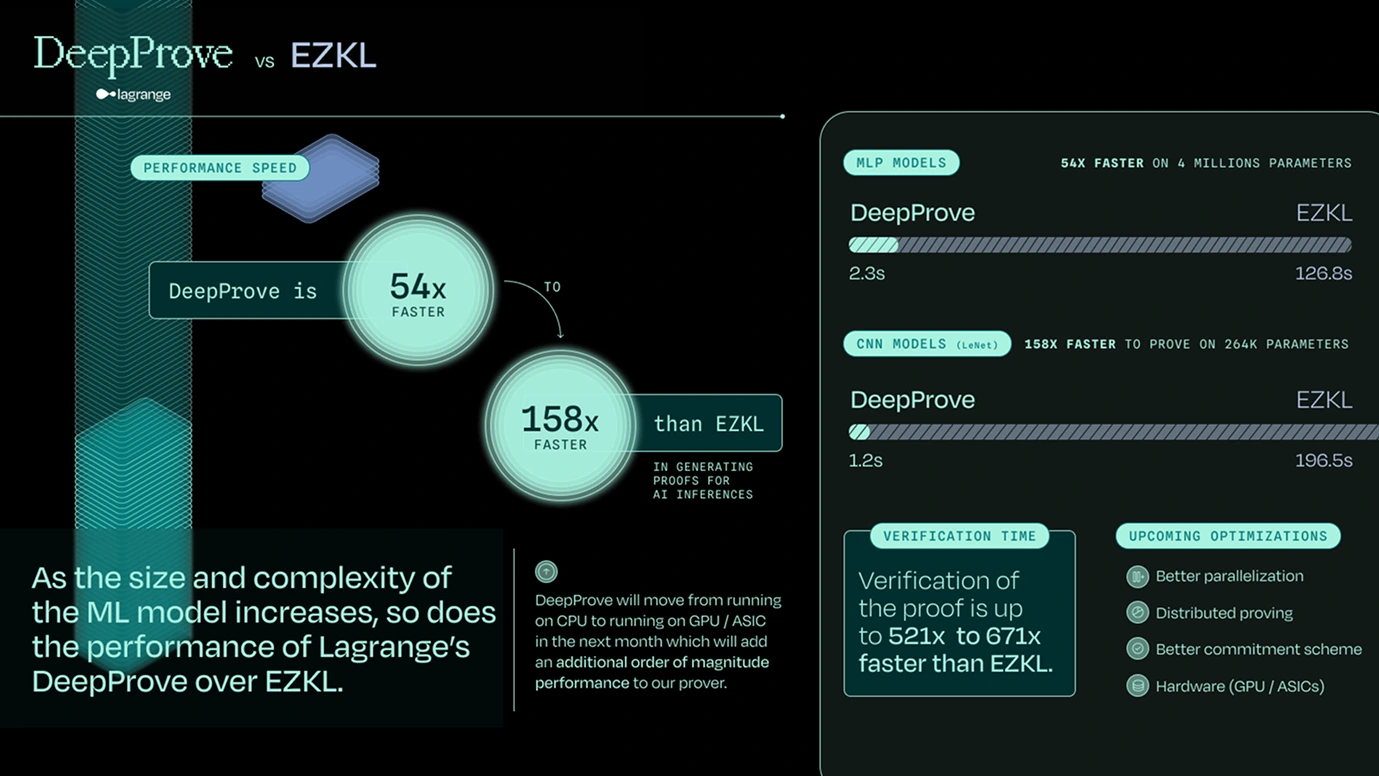
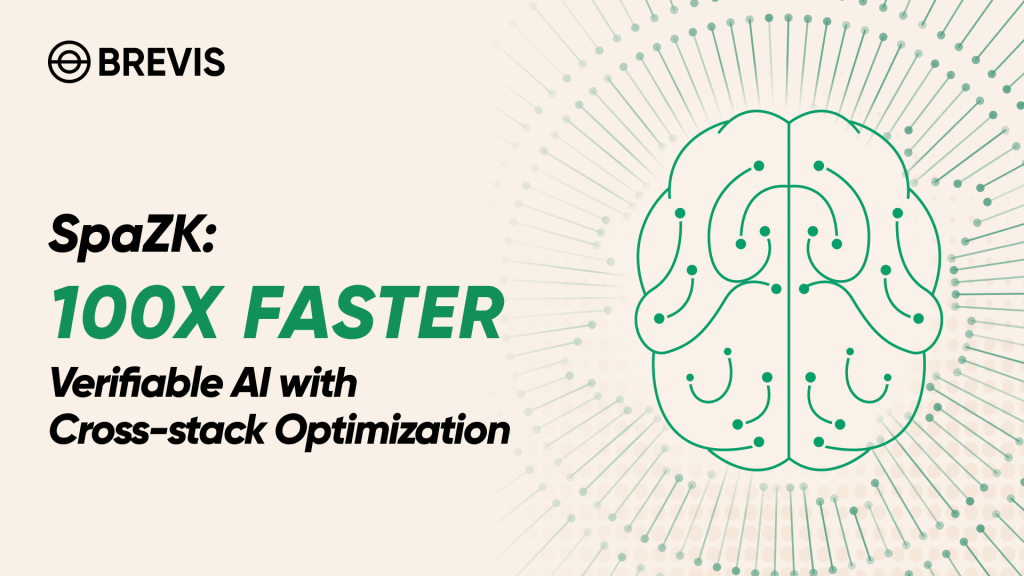
Generating zero-knowledge proofs for large language models or deep neural networks is computationally expensive. The time required to generate a proof can scale non-linearly with model complexity, creating a bottleneck for real-time applications. This overhead is the primary reason why full-model proofs are often impractical for consumer-grade devices.
To mitigate this, focus on optimizing the inference circuit. Techniques like quantization and pruning reduce the number of operations the prover must handle. By simplifying the arithmetic circuit, you lower the gas costs and generation time without sacrificing the integrity of the verification.
Avoiding circuit complexity traps
A common mistake is trying to prove the entire training process. This introduces unnecessary complexity and slows down verification. Instead, limit the scope to inference or specific, critical checkpoints. Proving that a model was trained correctly is often less valuable than proving that the output came from a specific, verified model version.
Keep the circuit design minimal. Every additional constraint increases the proof generation time. If you can verify the output against a known good state, you do not need to prove the entire journey there.
Choosing the right ZK framework
Not all zero-knowledge frameworks are built for machine learning. General-purpose ZK circuits are often too rigid for the floating-point arithmetic common in AI. You need a framework that supports efficient arithmetic over large fields or specific hardware accelerations.
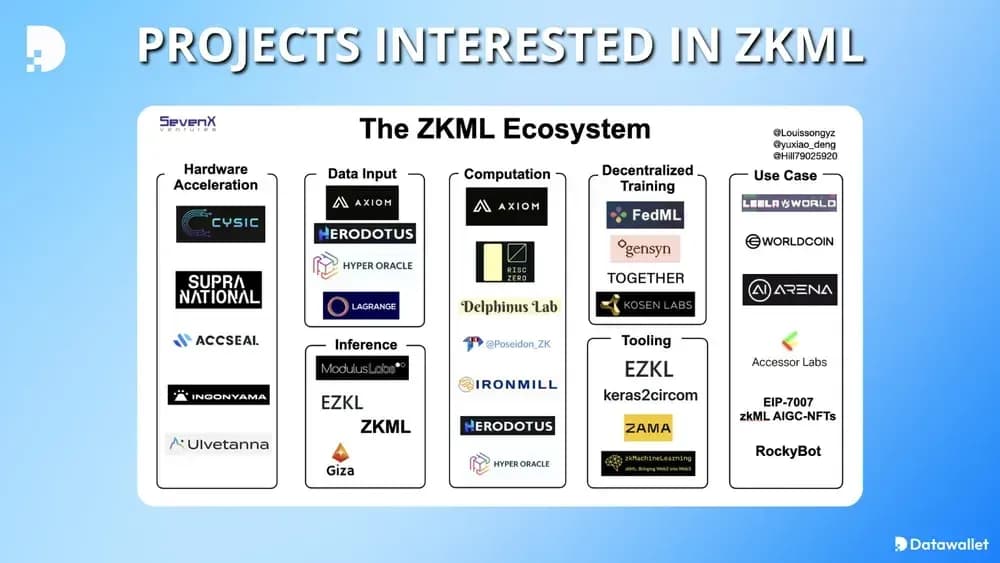
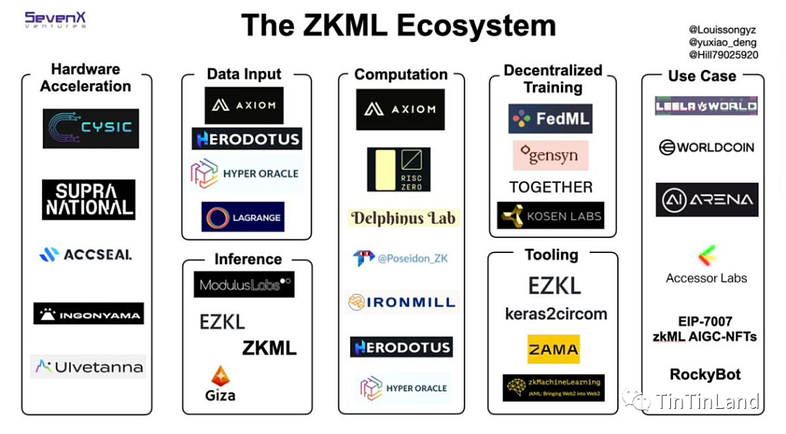
Frameworks like EZKL are designed specifically for ML workloads, translating ONNX models directly into circuits. Others, like Polygon Miden, offer different trade-offs in terms of setup time and proof size. Evaluate these tools based on your specific model architecture and latency requirements before committing to a stack.
Real-world ZKML applications
Black box models create liability. When a model makes a decision, the reasoning is often hidden, making audits impossible and compliance risky. ZKML AI solves this by attaching a cryptographic proof to the inference. This proof verifies that the model executed correctly without revealing the underlying data or the proprietary weights. The result is a verifiable outcome that regulators and auditors can trust.
Healthcare: Private Diagnostics
Patient data is highly sensitive and protected by strict regulations like HIPAA. Traditional cloud-based AI requires uploading sensitive records, creating a massive attack surface. ZKML enables predictive models to diagnose diseases or personalize treatment plans without exposing individual patient records. The hospital retains control of the data, while the AI provider gets only the proof that the diagnosis was generated by the approved model.
Finance: Fraud Detection Without Leakage
Banks need to detect fraud across multiple institutions but cannot share raw transaction data due to privacy laws. ZKML allows financial institutions to run joint fraud detection models. Each bank contributes encrypted inputs, and the system generates a proof that the transaction was flagged correctly based on shared rules. This collaborative approach improves detection rates without violating data sovereignty or customer privacy agreements.
Edge AI: Verifiable On-Device Inference
Running AI on edge devices, such as smartphones or IoT sensors, introduces trust issues. Users cannot easily verify if the device is running the official, secure model or a tampered version. ZKML allows the device to generate a proof of correct execution locally. This ensures that the AI’s output—such as a biometric authentication decision—was produced by the verified software, preventing spoofing and unauthorized model modifications.
Frequently asked questions about ZKML
Quick checklist
-
Verify circuit compatibilityEnsure your model architecture can be efficiently converted into a ZK circuit without excessive approximation.
-
Assess proof latencyBenchmark proof generation times to ensure they meet your application's real-time or near-real-time requirements.
-
Choose verification methodDecide between on-chain (immutable but expensive) and off-chain (fast but requires trusted infrastructure) verification.
-
Plan for overheadAccount for the computational costs of proof generation in your infrastructure budget and scaling strategy.
No comments yet. Be the first to share your thoughts!