What is ZKML AI?
Zero-Knowledge Machine Learning (ZKML) is a cryptographic framework that allows anyone to verify that an AI model executed a specific computation correctly, without exposing the underlying data, proprietary model weights, or the internal logic of the algorithm. It effectively merges zero-knowledge proofs (ZKPs) with machine learning to create verifiable AI.
In traditional AI systems, trust is often blind. When a bank uses an external model to approve a loan or a hospital relies on an AI for diagnosis, they must trust that the provider is using the correct model and that sensitive patient data remains private. ZKML replaces this trust with mathematical proof. It generates a cryptographic receipt that confirms the output is valid for the given input, ensuring both integrity and confidentiality.
This dual promise is critical for enterprise adoption. In finance, a bank can verify a fraud detection model flagged a transaction correctly without exposing its proprietary algorithm to competitors. In healthcare, a hospital can confirm a diagnostic AI processed patient records accurately without disclosing the sensitive medical data or the model's specific architecture.
KeyTakeaways items=["ZKML AI uses zero-knowledge proofs to verify AI model outputs without exposing the underlying data or proprietary model weights."]
Why enterprises need verifiable AI
Enterprises face a dual crisis in adopting artificial intelligence: they cannot share sensitive data openly, yet they also cannot trust opaque models to make critical decisions. Traditional cybersecurity measures protect data at rest and in transit, but they do not verify that the AI processed that data correctly. This gap creates a "black box" problem where organizations risk regulatory penalties, financial loss, and reputational damage from undetected model errors or malicious manipulation.
Zero-Knowledge Machine Learning (ZKML AI) resolves this by decoupling privacy from verification. It allows an organization to prove that an AI model executed a specific computation on private data without exposing the data itself or the internal logic of the model. This cryptographic proof ensures that the output is accurate and compliant with pre-defined rules, providing the auditability required for high-stakes industries.
Consider a healthcare provider using AI to diagnose medical imaging. Under standard encryption, the hospital keeps patient records private, but the AI vendor retains control over the model's behavior. With ZKML, the hospital can verify that the diagnosis was generated by the exact approved model version and that no unauthorized data leaks occurred, all while the patient’s identity remains hidden from the model itself.
In finance, banks must adhere to strict explainability regulations. ZKML enables institutions to run fraud detection algorithms on proprietary transaction data while generating mathematical proofs that the decision-making process followed regulatory guidelines. This approach transforms AI from a risky liability into a verifiable asset, ensuring that privacy and accountability are not mutually exclusive.
How ZKML verifies model integrity
ZKML transforms trust from a black box into a mathematical guarantee. It works by compiling machine learning models into arithmetic circuits—essentially breaking down complex neural network operations into basic addition and multiplication steps that a zero-knowledge proof system can handle. This process allows anyone to verify that a specific model ran on specific data without needing to see the model’s weights or the raw input.
Think of it like a sealed envelope. You can prove the envelope contains a correct answer to a puzzle without ever opening it or revealing the puzzle itself. In enterprise AI, this means a hospital can verify a diagnostic model is accurate without sharing patient records, and a bank can confirm a fraud detection model is unbiased without exposing its proprietary algorithms.
The verification process follows a strict sequence:
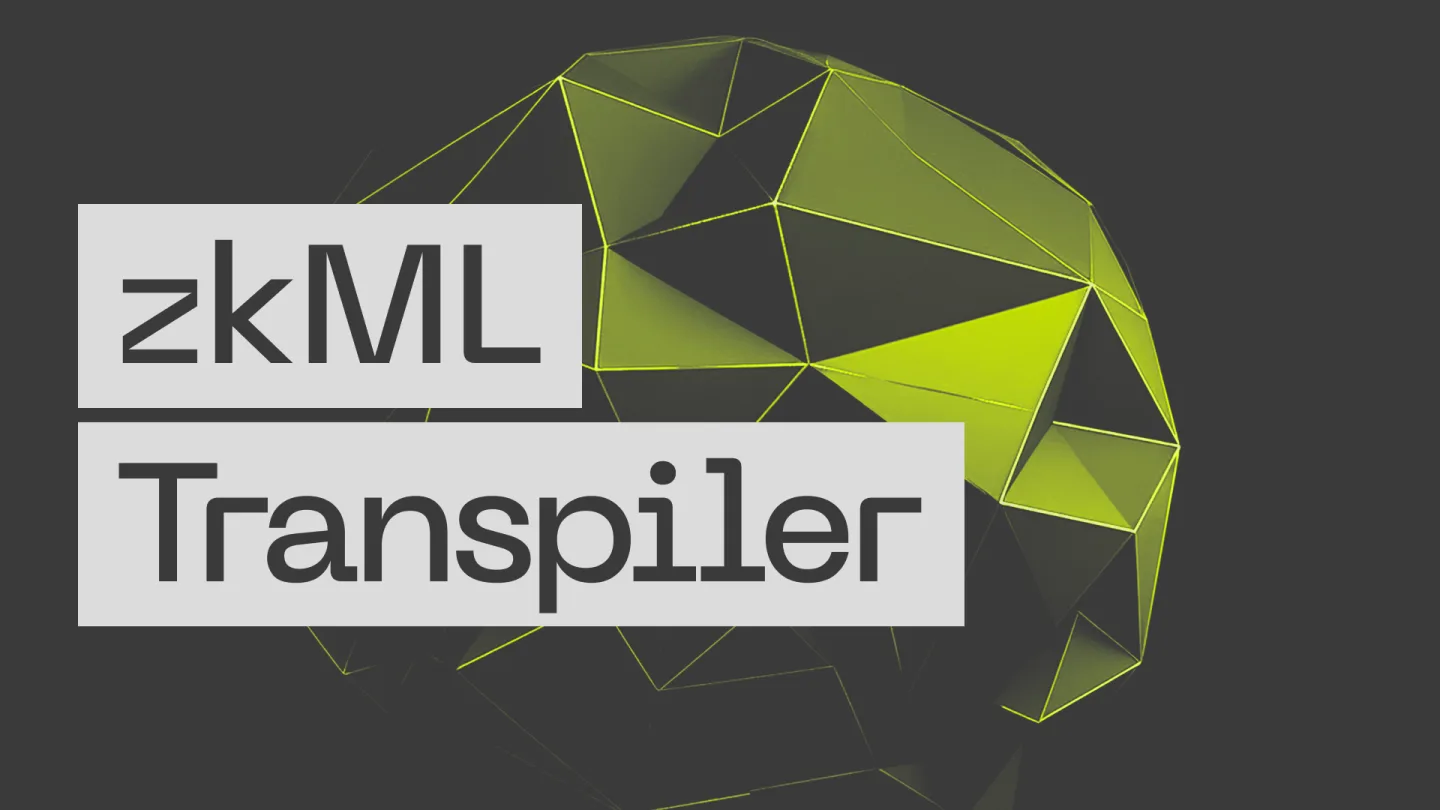
Machine learning models, typically built in frameworks like PyTorch or TensorFlow, are translated into a format called an arithmetic circuit. This involves converting every matrix multiplication and activation function into a series of simple field operations. Tools like ZKTorch automate this translation, ensuring the circuit accurately reflects the original model’s logic.
Once the circuit is defined, a prover generates a cryptographic proof. This proof demonstrates that the output was correctly derived from the input using the compiled circuit. The prover does not need to reveal the input data or the internal state of the computation, only that the mathematical constraints were satisfied.
A verifier checks the proof against the public parameters of the system. This verification is computationally cheap and fast, allowing for real-time validation. If the proof is valid, the verifier can be certain that the AI model executed correctly and that the result is trustworthy, even if the model owner is untrusted.
This mechanism solves the "oracle problem" in AI. Just as zero-knowledge proofs bring trust to blockchain transactions, ZKML brings trust to AI inference. It ensures that the AI you are interacting with is the one you intended to use, preventing model substitution or data manipulation by third-party providers.
Real-world ZKML use cases
ZKML AI moves beyond theoretical cryptography into industries where data sensitivity and regulatory compliance are non-negotiable. By allowing models to prove their outputs without exposing the underlying data or proprietary algorithms, ZKML creates a verifiable trust layer for enterprise AI.
Healthcare
Medical institutions face strict privacy mandates like HIPAA when processing patient records. ZKML allows hospitals to run diagnostic models on encrypted health data. The model can generate a proof that the diagnosis was computed correctly without exposing the patient’s private medical history or the hospital’s proprietary training data.
Finance
In banking, ZKML enables credit scoring and fraud detection without sharing raw transaction logs. Financial institutions can verify that a loan decision was made using a compliant, unbiased algorithm. This auditability satisfies regulators while keeping competitive models and customer data hidden from third parties.
Edge AI
For devices like smartphones or IoT sensors, ZKML ensures that on-device AI models behave as expected without requiring constant cloud verification. This is critical for privacy-preserving biometric authentication, such as iris scans, where the device proves it processed the image correctly without uploading the biometric template to a central server.
Challenges in ZKML adoption
While ZKML AI promises verifiable privacy, the technology currently faces significant hurdles that prevent widespread enterprise deployment. The primary bottleneck is computational overhead. Generating zero-knowledge proofs for complex neural networks is exponentially more resource-intensive than standard inference. For instance, verifying a simple logistic regression model might take seconds, but proving a large language model’s output can take hours or days, making real-time applications currently impractical for most use cases.
A second major challenge is the complexity of compiling models. Machine learning frameworks like PyTorch or TensorFlow are designed for flexibility, not the rigid arithmetic circuits required by zero-knowledge systems. Developers must manually translate flexible ML operations into constrained arithmetic gates, a process that is error-prone and requires deep expertise in both cryptography and machine learning. This friction creates a steep learning curve for engineers accustomed to rapid iteration.
To address these gaps, standardized tooling is emerging, with projects like ZKTorch leading the way. ZKTorch aims to act as a universal compiler, automatically translating common ML models into formats compatible with zero-knowledge proof systems. By abstracting the underlying cryptographic complexity, such frameworks hope to lower the barrier to entry, allowing developers to focus on model accuracy rather than proof generation mechanics.
Frequently asked questions about ZKML
How does ZKML verify AI outputs without exposing data?
ZKML uses zero-knowledge proofs to generate a cryptographic receipt that confirms an AI model executed a specific computation correctly. This proof validates that the output is mathematically consistent with the input and the model’s logic, without requiring the verifier to see the raw data, model weights, or internal algorithmic steps.
Is zero-knowledge proof technology reliable for enterprise use?
Yes, zero-knowledge proofs are a well-established cryptographic protocol with rigorous mathematical foundations. In the context of ZKML, they provide verifiable trustworthiness to AI systems, ensuring that computations are accurate and private without exposing sensitive proprietary information. This reliability is critical for regulated industries like healthcare and finance.
What are the main barriers to ZKML adoption?
The primary barriers are computational overhead and compilation complexity. Generating proofs for complex neural networks is resource-intensive, often making real-time applications impractical. Additionally, translating flexible ML frameworks like PyTorch into rigid arithmetic circuits requires specialized expertise, creating a steep learning curve for developers.
No comments yet. Be the first to share your thoughts!