

EZKL zkML Tutorial: Privacy-Preserving Logistic Regression Inference

In the evolving landscape of machine learning, where data privacy clashes with the demand for verifiable computations, zero-knowledge machine learning (zkML) emerges as a beacon of innovation. EZKL zkML stands at the forefront, offering developers a robust toolkit to execute privacy-preserving logistic regression inference without exposing sensitive model parameters or input data. This tutorial delves into the practical implementation, drawing from my experience leveraging zkML for confidential forecasting in global markets, where discretion is not just preferred but essential.

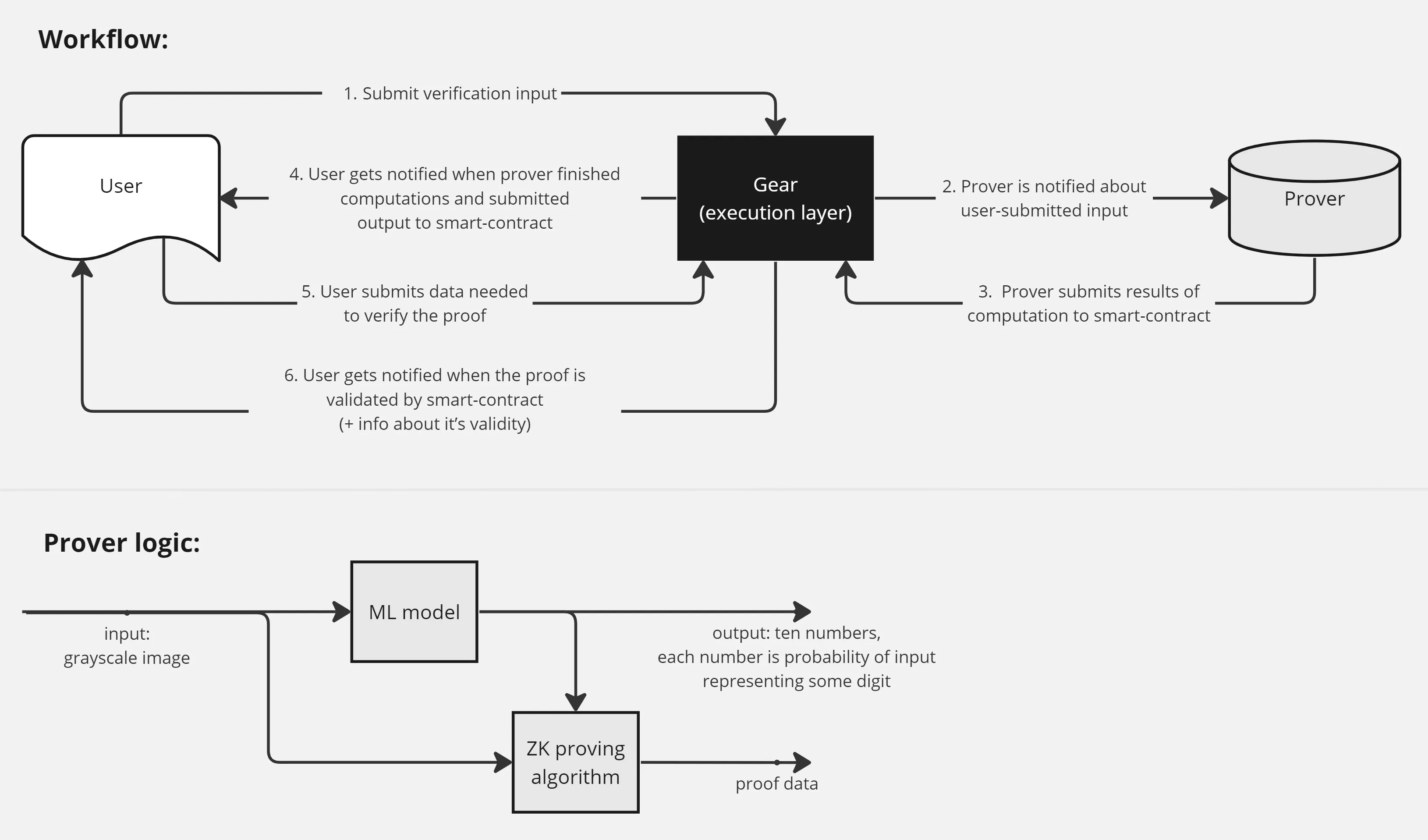
Logistic regression, a cornerstone of statistical modeling, predicts binary outcomes through a sigmoid-transformed linear combination of features. Its simplicity belies profound utility in classification tasks, from credit risk assessment to medical diagnostics. Yet, traditional deployments falter under privacy scrutiny; inputs like patient records or financial profiles risk exposure during inference. Here, EZKL zkML transforms this vulnerability into strength, generating succinct proofs that affirm correct computation while concealing the underlying data. Recent advancements, as noted in EZKL’s 2026 updates, enhance support for such models, optimizing circuit generation for real-world scalability.
Why EZKL Excels in Privacy-Preserving Logistic Regression
Reflecting on institutional AI analytics, I have witnessed how privacy leaks erode trust in predictive models. EZKL addresses this by compiling ONNX-exported neural networks into arithmetic circuits, then proving inference via zk-SNARKs. For logistic regression, this means exporting a scikit-learn model to ONNX, calibrating it with EZKL’s settings file, and producing a proof that verifies output authenticity sans revelation. Unlike homomorphic encryption’s computational heft, zkML offers efficiency; proofs verify in milliseconds on consumer hardware. This aligns with broader zkML trends, bridging AI and blockchain for tamper-proof, private decisions in decentralized applications.
Generating the ZK Inference Proof
In this pivotal step, we invoke the EZKL CLI to generate a zero-knowledge proof attesting to the correct execution of logistic regression inference on private data.
ezkl prove \
  --model logistic_regression.ezkl \
  --input inference_input.json \
  --pk proving_key.pk \
  --proof inference_proof.pf \
  --settings settings.json \
  --strategy accshadow
This process yields a succinct proof, embodying the profound elegance of zk-SNARKs: computational integrity verified without disclosure of the underlying inputs, a cornerstone of privacy-preserving machine learning.
Consider a scenario in bond markets: a trader queries a proprietary logistic model on confidential yield data. EZKL ensures the prediction’s validity reaches the verifier, model intact and inputs obscured. Scholarly works, such as those surveying ZKP-based verifiable machine learning, underscore this paradigm’s potential for fairness and accountability in AI systems.
Environment Setup for Zero-Knowledge ML Implementation
Embarking on this zkML inference tutorial requires a deliberate setup, mirroring the precision demanded in low-risk macro narratives. Begin with Python 3.10 or later, as EZKL’s optimizations demand modern interpreters. Virtual environments isolate dependencies, preventing conflicts akin to those plaguing legacy financial models.
This code snippet initializes the workspace. EZKL, per its PyPI documentation, integrates seamlessly with PyTorch and ONNX ecosystems. Verify installation via ezkl --version, confirming the latest release with bolstered logistic regression support. Next, procure a dataset; the canonical Iris dataset suffices for demonstration, classifying species via sepal measurements. Load it with pandas and sklearn, preprocessing for binary outcomes: versicolor versus non-versicolor.
Training and Exporting Private ML Models with EZKL
Training commences with sklearn’s LogisticRegression, tuned for ONNX compatibility. Fit on scaled features, achieving convergence measured by log-loss. Export demands torch. onnx. export or sklearn-onnx converters, yielding a graph interpretable by EZKL. Calibration follows: craft a JSON settings file specifying input shapes, output assertions, and variables like scale (1e-8 for logits) and lookup tables for accuracy.
In practice, I reflect on how such exports parallel anonymizing market signals in zkML forecasting; the model’s essence persists, verifiable yet veiled. Generate the R1CS circuit with ezkl compile, aggregating parameters into a serialized witness. This phase, computationally intensive yet one-time, yields artifacts primed for proof generation.
Sample training code illustrates: import requisite libraries, instantiate regressor with solver=’lbfgs’, train on X_train y_train, then export. This foundation sets the stage for inference, where privacy-preserving logistic regression truly shines in subsequent proof orchestration.
With the model exported and circuit compiled, the pivot to proof generation unveils zkML’s core elegance. Invoke EZKL’s prove command, furnishing the ONNX model, input witness (encrypted features), and settings. The prover computes inference internally, yielding logits transformed via sigmoid, then attests correctness through a zk-SNARK. Outputs manifest as a proof file and public witness, verifiable sans private inputs. This process, honed in EZKL’s 2026 iterations, slashes proving times for logistic regression, rendering it viable for high-frequency queries in privacy-centric DApps.
Orchestrating Privacy-Preserving Inference
In my macro research, where zkML shields yield curve predictions from proprietary data spills, this inference loop proves indispensable. Prepare inputs as a JSON witness: scale features to match training normalization, obfuscate via EZKL’s visibility flags. Execution mirrors a confidential bond rating: feed obscured market indicators, retrieve verified probability of default, model undisclosed.
This snippet dispatches the proof. Parameters like pk. key stem from prior keygen; public values include prediction logits. Reflection yields insight: zkML’s succinctness empowers blockchain oracles, embedding proofs on-chain for tamper-evident AI in DeFi risk engines.
Verification crowns the workflow. Load the verifying key and proof via ezkl verify; success affirms computation fidelity. Integrators, from zkSync DApps to institutional dashboards, query this sans recompute, conserving resources. Scholarly surveys on ZKP-verifiable ML affirm such protocols foster accountable AI, mitigating biases through auditable yet private inferences.
Real-World Deployment: From Tutorial to zkML Production
Scaling this zero-knowledge ML implementation demands strategic calibration. For production private ML models EZKL, aggregate multiple inferences into batch circuits, amortizing overhead. EZKL’s analytics extensions suit descriptive tasks post-prediction, like aggregating probabilities privately. Envision energy trading platforms, per recent literature: zkML logistic models forecast demand privately, trading proofs on blockchain without data exposure.
Challenges persist; circuit sizes balloon with feature dimensionality, yet EZKL’s optimizations, including lookup table compression for sigmoid approximations, mitigate this. In global markets, I deploy analogous setups for long-term bond forecasts, where privacy-preserving logistic regression classifies recession risks from veiled macroeconomic vectors. Verifiers gain confidence in outputs, fostering trust absent in black-box models.
ZKML bridges AI’s opacity with blockchain’s verifiability, recasting logistic regression as a privacy fortress for sensitive decisions.
Tuning hyperparameters sharpens efficacy: select 1e-8 scale for numerical stability, assert output bounds in settings to prune invalid proofs. Community resources, echoing EZKL’s blog evolutions, proffer templates for logistic variants, from multinomial to elastic net regressions.
Advanced Considerations in EZKL zkML Inference
Beyond basics, integrate with PyTorch for dynamic graphs or TorchServe for serving. For blockchain synergy, export proofs to Ethereum-compatible formats, enabling zkML inference tutorial applications in verifiable prediction markets. Performance benchmarks reveal sub-second provings on GPUs, outpacing rivals in developer accessibility.
Ethical reflections temper enthusiasm: while zkML curtails data monopolies, ensure diverse training to avert encoded prejudices. My conservative approach prioritizes low-risk narratives, auditing circuits for soundness. Future horizons gleam with recursive proofs, compounding logistic inferences into hierarchical models without privacy erosion.
This EZKL zkML tutorial equips you to forge privacy-preserving logistic regression pipelines, mirroring institutional safeguards in open-source form. Experiment iteratively, as I do in macro forecasting, unveiling zkML’s quiet revolution in confidential intelligence.