Defining ZKML for regulated markets
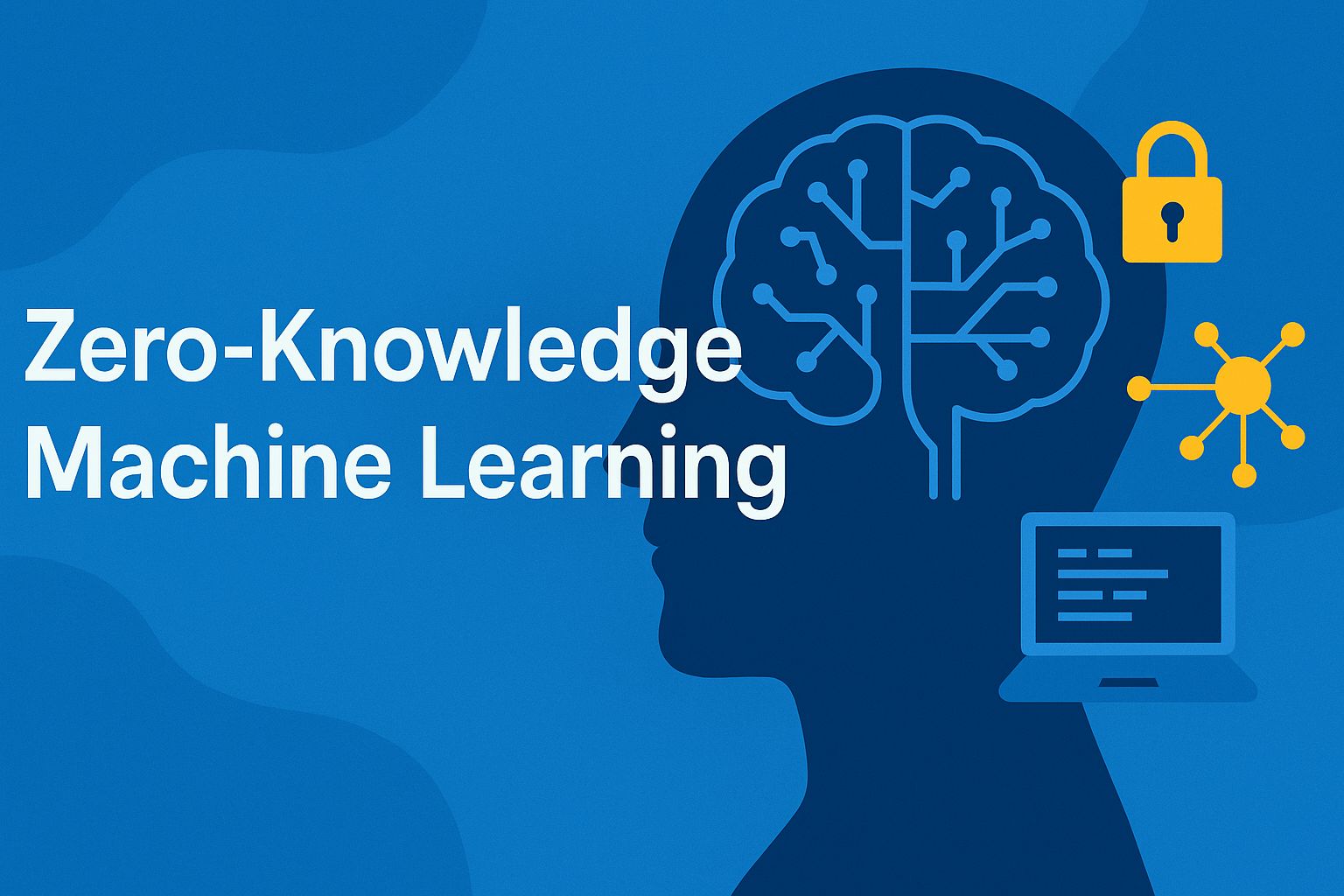
Zero-Knowledge Machine Learning (ZKML) is a cryptographic protocol where the party computing the output of an AI model also generates a mathematical proof that the computation was performed correctly. Unlike traditional privacy measures that obscure data, ZKML allows third parties to verify the integrity of a model’s execution without accessing the underlying intellectual property or sensitive input data. This distinction is critical for regulated industries where model transparency is mandated, but proprietary algorithms are protected trade secrets.
The technology functions by translating machine learning inference into a format that can be proven using zero-knowledge proofs (ZKPs). As noted by Kudelski Security, this creates a verifiable chain of trust. When a model processes data, it does not merely return a result; it returns the result alongside a cryptographic certificate. This certificate can be validated instantly by any auditor or regulatory body, confirming that the output was generated by the specific, approved model version and not tampered with during execution.
For enterprise compliance, this capability shifts the burden of trust from opaque black-box models to mathematically verifiable assertions. A decentralized lending platform, for example, can use ZKML to prove that a borrower’s credit score was calculated according to regulatory guidelines without revealing the borrower’s financial history or the bank’s proprietary scoring algorithm. This balance of privacy and auditability addresses the core tension in regulated AI deployment.
Market drivers for enterprise adoption
The primary catalyst for zero-knowledge machine learning (ZKML) is the collision of stringent regulatory frameworks with the opacity of proprietary AI models. For enterprises in finance and healthcare, the inability to verify the integrity of an AI decision without exposing sensitive underlying data creates a compliance bottleneck. ZKML resolves this by allowing organizations to prove that a model adhered to specific regulatory constraints without revealing the model weights or the private data used during inference.
Regulatory pressure is intensifying across major jurisdictions. The European Union’s AI Act mandates transparency and risk management for high-risk AI systems, requiring providers to demonstrate that their models operate within defined ethical and technical boundaries. Similarly, the General Data Protection Regulation (GDPR) enforces data minimization principles, making it difficult for financial institutions to use external machine learning models for credit scoring without risking privacy violations. ZKML enables these institutions to validate that a credit decision was based on compliant criteria, satisfying auditors while preserving customer confidentiality.
In the healthcare sector, the Health Insurance Portability and Accountability Act (HIPAA) imposes strict limits on the sharing of protected health information (PHI). Hospitals and insurers often rely on third-party AI for diagnostic support, but sharing patient data with external model providers is legally fraught. By employing ZKML, healthcare providers can verify that a diagnostic model produced an accurate result without transmitting the patient’s medical records to the model’s owner. This cryptographic verification shifts the burden of trust from data exposure to mathematical proof.
The economic implication is significant: ZKML reduces the legal liability associated with black-box AI decisions. As regulatory penalties for non-compliance increase, the cost of verification becomes a critical component of enterprise risk management. The following chart illustrates the recent market volatility in the broader zero-knowledge technology sector, reflecting investor interest in these compliance-focused cryptographic solutions.
Technical architecture and proving systems
Zero-knowledge machine learning (zkML) relies on translating machine learning computations into mathematical constraints that can be proven without revealing the underlying data or model weights. The core technology involves converting model inference into arithmetic circuits, which are then processed by zero-knowledge proof systems like ZK-SNARKs (Succinct Non-Interactive Arguments of Knowledge). This process allows an enterprise to verify that a specific AI model produced a result without exposing the proprietary algorithm or sensitive input data.
The feasibility of zkML depends heavily on the efficiency of the proving system. Frameworks such as EZKL (Efficient Zero-Knowledge for Linear Algebra) and platforms like Polyhedra Network focus on optimizing the translation of neural network operations—particularly matrix multiplications and activations—into constraints that are cheap to prove. EZKL, for instance, uses a recursive proof composition strategy to handle large-scale models, reducing the computational overhead that previously made zkML impractical for enterprise use.
However, a significant trade-off exists between proof generation time and verification speed. While verifying a proof is computationally inexpensive and nearly instantaneous, generating the proof can be resource-intensive. For complex models, proof generation may take minutes or even hours, requiring substantial CPU or GPU resources. This latency is a critical consideration for real-time compliance applications, where immediate verification is required.
| Component | Role in zkML | Primary Trade-off |
|---|---|---|
| ZK-SNARKs | Proof generation and verification | High generation cost vs. instant verification |
| EZKL | ML-to-circuit compiler | Optimizes linear algebra but adds complexity |
| Polyhedra Network | Decentralized proving infrastructure | Scalability vs. centralized trust assumptions |
The choice of proving system impacts the overall architecture. ZK-SNARKs offer small proof sizes and fast verification, making them ideal for on-chain compliance checks. However, their setup phase requires a trusted ceremony, which some regulated entities view as a risk. Alternative systems like STARKs (Scalable Transparent Arguments of Knowledge) do not require a trusted setup and are quantum-resistant, but they produce larger proof sizes, which can increase storage and transmission costs for enterprise applications.
For legal and regulatory compliance, the transparency of the verification process is paramount. The cryptographic proof serves as an immutable audit trail, demonstrating that the model operated within predefined parameters. This shifts the burden of trust from the model provider to the mathematical verification, ensuring that enterprises can rely on AI decisions without needing to inspect the black-box internals of every model execution.
Real-world applications in finance and healthcare
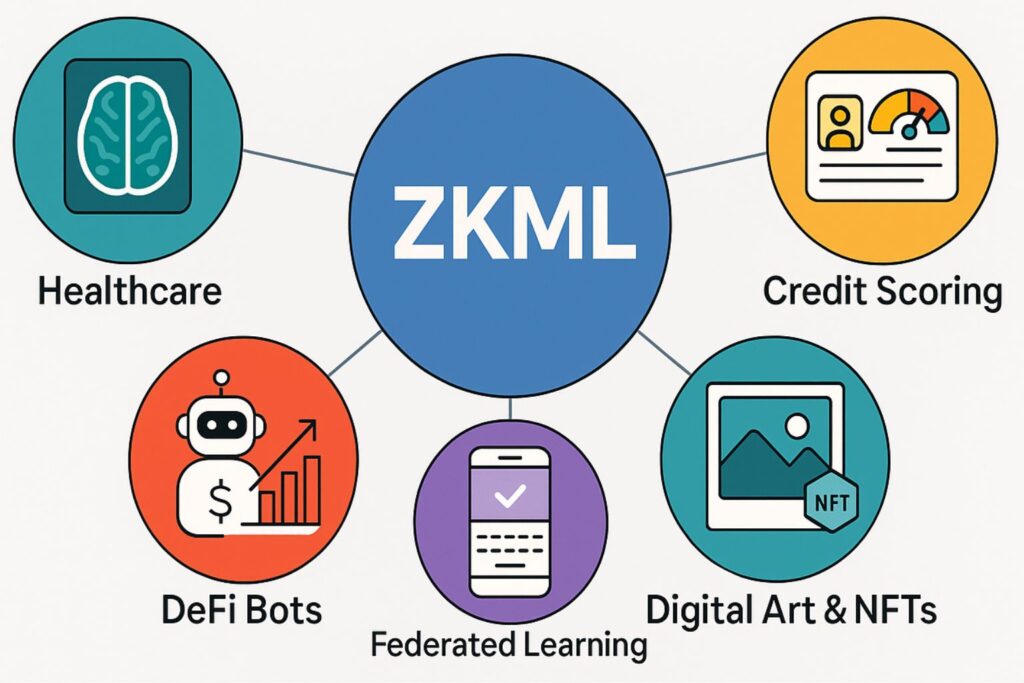
Zero-knowledge machine learning (ZKML) moves beyond theoretical cryptography to solve specific compliance bottlenecks in regulated industries. By allowing AI models to prove their outputs are correct without exposing the underlying data or proprietary algorithms, ZKML addresses the tension between model transparency and data privacy. This capability is particularly critical in finance and healthcare, where regulatory frameworks like GDPR and HIPAA restrict data movement.
In the financial sector, ZKML enables private credit scoring. Decentralized lending platforms can evaluate a borrower's creditworthiness by generating a zero-knowledge proof that verifies the score exceeds a required threshold. The system confirms eligibility without revealing the borrower's financial history or the bank's proprietary risk model. This preserves individual privacy while maintaining the rigor of underwriting standards.
Healthcare applications focus on secure diagnostic verification. Hospitals and research institutions can validate that a medical AI model processed patient data according to approved protocols without exposing sensitive medical records. This ensures compliance with patient privacy laws while allowing third-party auditors to verify the integrity of diagnostic results. The cryptographic proof serves as an immutable audit trail for regulatory review.
The following comparison highlights how ZKML verification differs from traditional AI auditing methods across key operational metrics.
| Feature | Traditional AI Verification | ZKML Verification |
|---|---|---|
| Data Privacy | Data must be exposed to auditors | Data remains encrypted and private |
| Model Integrity | Relies on trust or open-source code | Cryptographically proven execution |
| Regulatory Compliance | Complex data sharing agreements | Simplified audit via proof verification |
Market performance of zKML assets
The market for zero-knowledge machine learning tokens remains in an early, volatile phase. As of the latest data, the zKML token trades at approximately $0.0106, reflecting a 24-hour trading volume of roughly $3,054. This low liquidity indicates that current price movements are driven by speculative interest rather than broad institutional adoption.
For investors and legal analysts, the primary focus should be on the underlying utility rather than short-term price action. The value proposition of zKML lies in its ability to verify AI model outputs without exposing proprietary data, a capability increasingly relevant for enterprise compliance. However, the current market capitalization suggests that widespread commercial deployment is still pending.
The following chart illustrates the recent price trajectory of zKML against the US Dollar. This data provides a baseline for understanding the asset's volatility and trading patterns.
frequently asked questions about zkml
what is zkml crypto?
Zero-knowledge machine learning (zkML) is a cryptographic technique that facilitates the verification of machine learning models on blockchain protocols without disclosing the underlying computations or data. This framework allows enterprises to validate AI outputs while maintaining strict confidentiality over proprietary algorithms and sensitive input data.
what is a real world zkml application?
A primary use case involves decentralized lending platforms evaluating borrower creditworthiness. The system generates a zero-knowledge proof verifying that a borrower's credit score exceeds a required threshold. This process confirms eligibility without revealing the borrower's financial data or the specific proprietary model used for the assessment.
is xrp a zk proof?
The XRP Ledger has integrated Boundless, a zero-knowledge proving network, to support native verification of ZK proofs. This integration enables private transactions on its public blockchain, demonstrating how established infrastructure is adapting to support institutional privacy requirements through cryptographic verification.
No comments yet. Be the first to share your thoughts!