What ZKML Actually Does
Zero-knowledge machine learning (zkML) is a cryptographic protocol that allows a party to prove that an AI model executed correctly on specific data without revealing the inputs, the model weights, or the internal computation steps. Unlike traditional privacy tools that rely on encryption or access controls, zkML provides mathematical certainty that the output was generated by the exact model intended.
In this framework, the prover generates a cryptographic proof alongside the model's prediction. A verifier can then check this proof instantly to confirm the computation's validity. This separation of execution and verification is critical for high-stakes environments where trust in the computation is as important as the result itself. As noted by Kudelski Security, this approach combines zero-knowledge proofs with machine learning to create verifiable systems.
The distinction between zkML and generic privacy measures is functional. Encryption protects data at rest or in transit, but it does not prove that the data was processed correctly. zkML addresses the integrity of the computation itself. It ensures that the AI model has not been tampered with and that the inference was performed accurately, even if the underlying model is proprietary or the data is sensitive.
This capability is particularly relevant in financial markets and regulated industries. When AI models drive trading decisions or risk assessments, stakeholders need assurance that the model is behaving as expected. zkML offers a way to audit these decisions cryptographically, providing a layer of trust that traditional black-box models cannot offer.
Why Enterprises Need Verifiable AI
The rapid deployment of large language models and complex machine learning systems has created a structural trust deficit in high-stakes industries. In sectors like finance and healthcare, the inability to audit the internal logic of black-box AI models presents an unacceptable risk. Regulators and compliance officers cannot rely on opaque outputs when decisions impact capital allocation, patient care, or legal liability. Without verifiable proof of how a model reached a conclusion, enterprises face potential regulatory penalties and reputational damage that outweigh the efficiency gains of automation.
Zero-knowledge machine learning (zkML) addresses this gap by enabling third parties to verify the correctness of AI computations without exposing the underlying proprietary algorithms or sensitive training data. This cryptographic approach allows financial institutions to prove that a credit risk assessment followed specific, auditable rules, or that a medical diagnostic tool processed patient data according to privacy protocols, all while keeping the model weights confidential. As noted by cybersecurity researchers, zkML combines zero-knowledge proofs with machine learning to create a verifiable layer over traditional AI operations, shifting the burden of trust from blind faith to cryptographic certainty.
The market driver for this technology is not merely technical curiosity but a response to tightening regulatory frameworks. As governments introduce stricter guidelines on algorithmic transparency, the demand for verifiable AI infrastructure is accelerating. Enterprises are increasingly seeking solutions that provide mathematical guarantees of model integrity, ensuring that AI systems operate within defined boundaries. This shift is transforming AI from a "black box" into a transparent, auditable component of enterprise infrastructure, enabling broader adoption in regulated environments where trust is the primary currency.
How ZKML Protects Intellectual Property
ZKML protects intellectual property by decoupling model execution from model visibility. In traditional AI deployments, accessing the model weights is often required to generate predictions, creating a risk of theft or reverse engineering. zkML allows a model to run in a trusted execution environment or via zero-knowledge proofs, where the computation occurs without the host ever seeing the actual weights or the specific input data.
This separation ensures that proprietary algorithms remain confidential even when outsourced to third-party cloud providers or integrated into decentralized networks. For financial institutions, this means proprietary trading algorithms or risk models can be deployed at scale without exposing the core IP to potential competitors or malicious actors. The verification process confirms that the correct, unmodified model was used, providing a layer of security that standard encryption cannot achieve.
Current ZKML Market Landscape
The financial ecosystem surrounding zero-knowledge machine learning (ZKML) is currently defined by a divergence between foundational infrastructure development and speculative token markets. While the cryptographic promise of verifying AI computations without revealing proprietary data or user inputs has attracted significant venture capital, the realized market capitalization remains small and highly volatile. Investors are currently navigating a landscape where technical proof-of-concepts are still maturing alongside early-stage tokenomics.
Infrastructure providers are establishing the technical standards that will likely dictate future market leadership. Polyhedra Network has positioned itself as a primary developer of zkML verification protocols, focusing on enabling any party to verify that an AI model was executed correctly without compromising the underlying data. Similarly, projects like EZKL are working to bridge the gap between traditional machine learning frameworks and zero-knowledge proving systems, aiming to make verification accessible to standard AI developers rather than just cryptographers.
The tokenized asset class reflects this early-stage status. The ZKML token, which serves as the governance and utility token for the ZKML systems network, trades at a fraction of a cent with low daily volume. According to CoinMarketCap data, the token often sees 24-hour trading volumes under $4,000, indicating that the current market is driven by a niche community of crypto-native developers and early adopters rather than broad institutional interest. This low liquidity highlights the high risk associated with investing in ZKML infrastructure tokens today.
This market dynamic creates a high-stakes environment for early participants. The gap between the technical capability of ZKML—allowing for private, verifiable AI on-chain—and the actual adoption of these systems by major AI providers is significant. Until large-scale AI inference can be proven cost-effectively on-chain, the market will likely remain speculative. The current price action of ZKML tokens serves as a barometer for sentiment rather than a reflection of widespread commercial utility.
Key Questions About ZKML
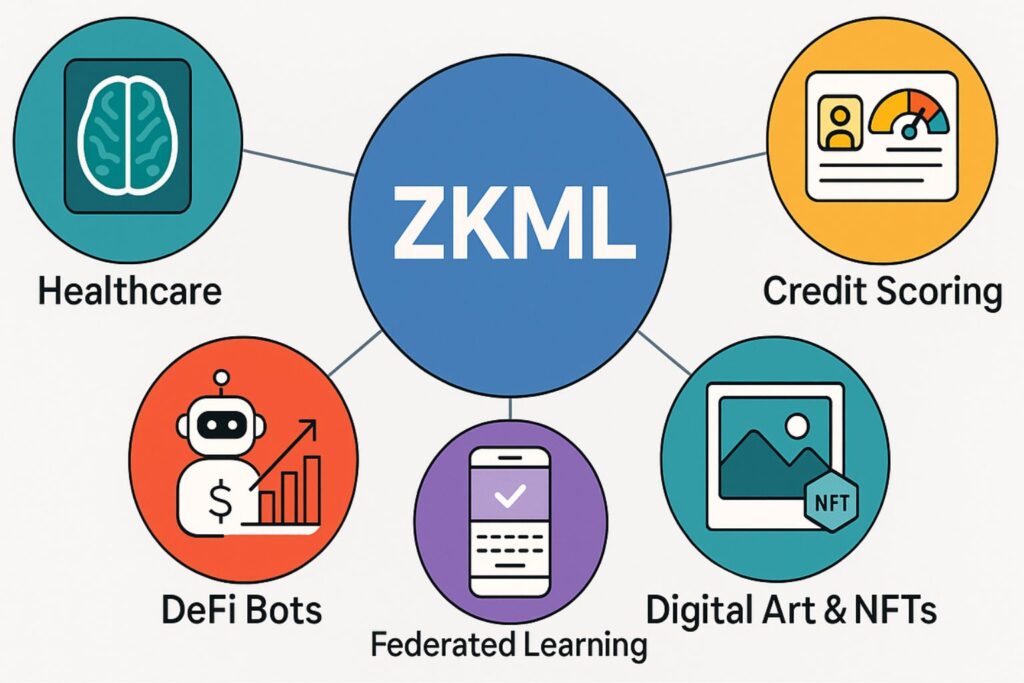
Zero-knowledge machine learning sits at the intersection of cryptography and artificial intelligence, creating a system where the validity of an AI model's output can be verified without exposing the underlying data or the model's proprietary weights. This capability addresses the "black box" problem in AI, offering a mathematical guarantee that the computation was performed correctly according to the specified rules.
Is zero-knowledge proof legit?
Zero-knowledge proofs (ZKPs) are not theoretical concepts; they are mathematically proven cryptographic protocols that have been rigorously tested for decades. They provide a way for one party to prove to another that a statement is true without revealing any information beyond the validity of the statement itself. In the context of Web3 and secure computing, ZKPs are essential for ensuring privacy and integrity, serving as the foundational technology for trustless verification in digital systems.
What is zkML crypto?
The term "zkML crypto" refers to the integration of zero-knowledge machine learning protocols with blockchain infrastructure. This combination allows blockchain networks to verify the results of off-chain AI computations natively. For instance, the XRP Ledger recently integrated Boundless, a ZK proving network, to enable private transactions and support native verification of ZK proofs on its public blockchain. This integration highlights how zkML is becoming a critical component for institutional-grade privacy and verification in financial markets.
What is a zkML file?
A zkML file is not a standard document but rather a cryptographic artifact consisting of two main components: the AI model's output and the accompanying zero-knowledge proof. When an AI model processes an input, it generates a result along with a proof that mathematically certifies the computation was executed correctly on the intended model and data. This proof can be verified by any party on a blockchain or secure system without needing access to the original model weights or sensitive input data.
No comments yet. Be the first to share your thoughts!