What ZKML Actually Does
Zero-Knowledge Machine Learning (ZKML) sits at the intersection of two distinct fields: zero-knowledge proofs (ZKPs) and machine learning. It is not a new type of AI model, but rather a verification layer. Traditional machine learning systems often operate as "black boxes," where the internal logic and data remain hidden. ZKML changes this by allowing a prover to demonstrate that a model executed its computations correctly on specific input data, while revealing nothing else about the model architecture or the sensitive information processed.
This distinction is critical for enterprise privacy. In conventional ML, securing data usually means encrypting it at rest or in transit. However, once the data is decrypted for the model to process, it is exposed. ZKML shifts this paradigm. Instead of trusting the model provider or the infrastructure, the system generates a cryptographic proof that attests to the integrity of the computation. This means an enterprise can use a third-party AI model without ever seeing the proprietary weights or leaking their confidential datasets.
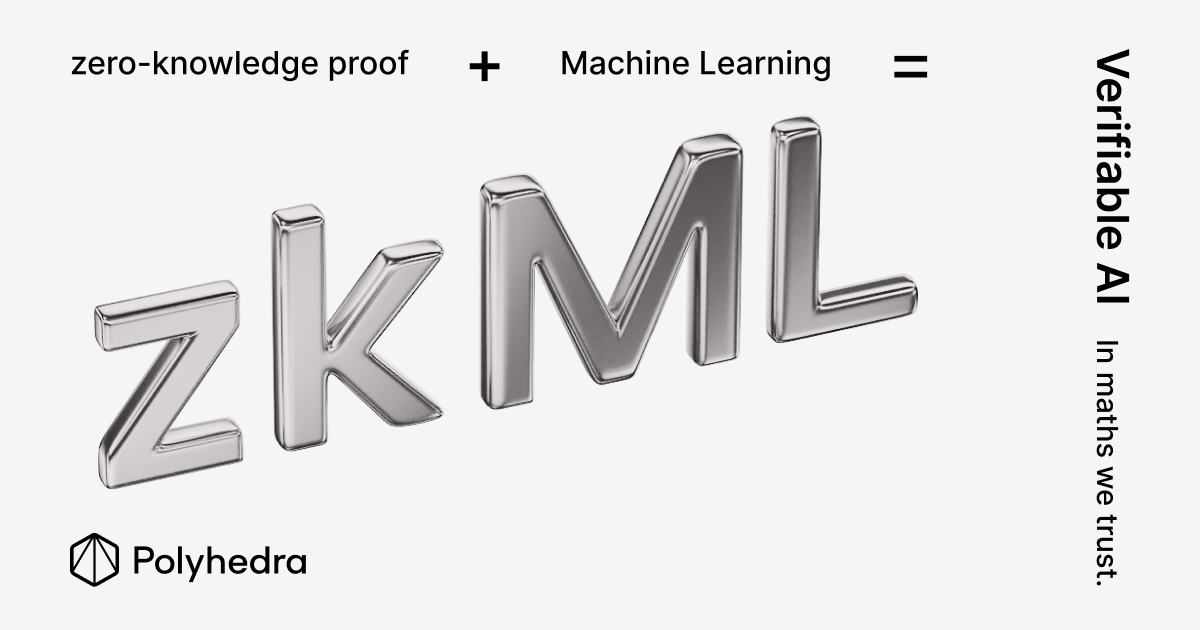
The technology enables verifiable AI in high-stakes environments like finance and healthcare. As noted by Polyhedra Network, zkML represents the next evolution of AI by allowing anyone to verify that an AI model was executed correctly without revealing how the output was generated or what data it was based on Polyhedra Network. This capability solves key privacy and trust challenges that conventional ML systems cannot address, ensuring that sensitive financial or medical data remains private even during active inference.
By separating the execution of the model from the verification of its result, ZKML creates a trustless environment. The verifier receives a proof and a result. If the proof is valid, they can be certain the result came from the correct model and data, without needing to inspect the underlying computation. This approach is increasingly viewed as essential for deploying AI in regulated industries where data sovereignty and auditability are non-negotiable requirements Kudelski Security.
The Trust Deficit in Current AI
Enterprise adoption of artificial intelligence has collided with a fundamental structural flaw: the black-box nature of modern models. When a financial institution or healthcare provider deploys a machine learning system, they are effectively outsourcing critical decision-making to proprietary algorithms they cannot fully inspect. This opacity creates a trust deficit that traditional compliance frameworks cannot resolve.
The core issue is the inability to audit inference in real time. Current cloud-based AI services process data without providing cryptographic proof that the model executed the correct logic on the submitted inputs. An enterprise cannot distinguish between a legitimate prediction and one influenced by subtle model drift or hidden bias. This lack of verifiability is unacceptable in sectors where regulatory penalties and reputational damage are severe.
This opacity also exposes organizations to significant intellectual property and data leakage risks. When sensitive data is sent to third-party inference engines, the enterprise loses control over that information. There is no guarantee that the provider is not retaining training data or that the model weights themselves are not being exfiltrated. The current architecture treats data as a commodity to be processed, rather than a protected asset.
Zero-Knowledge Machine Learning (ZKML) addresses these vulnerabilities by decoupling verification from disclosure. It allows an enterprise to verify that an AI model was executed correctly without revealing the underlying computations, the model weights, or the input data. This shift transforms AI from an untrusted service into a provably correct utility, aligning technological capability with the strict governance requirements of high-stakes industries.
How ZK proofs verify inference
Proving that a neural network ran correctly requires translating mathematical operations into a format a zero-knowledge system can process. Standard machine learning models rely on floating-point arithmetic and complex activation functions, which are inefficient or impossible to represent directly in finite fields used by cryptographic protocols. To bridge this gap, systems like ZKML convert these operations into arithmetic circuits. This process maps every matrix multiplication, addition, and non-linear activation to a series of simple constraints, creating a mathematical proof of the model's execution path.
The core challenge lies in the efficiency of this translation. A naive conversion of a large language model or vision transformer into an arithmetic circuit would result in a proof generation time that is computationally prohibitive for enterprise use. Optimizing systems address this by simulating the circuit layout process to determine the most efficient arrangement of gates. By using cost models to evaluate different layout configurations, these systems minimize the number of constraints and the overall size of the proof, making real-time verification feasible.
Once the arithmetic circuit is established, the system generates a Succinct Non-interactive Argument of Knowledge (SNARK) or a Scalable Transparent Argument of Knowledge (STARK). The prover uses the private inputs—the model weights and the user data—to generate a cryptographic proof that the circuit was satisfied. The verifier, who may be a blockchain node or a remote server, checks this proof using only the public inputs and the model's hash. This ensures that the output was generated by the exact specified model without revealing the underlying weights or the sensitive data used in the inference.
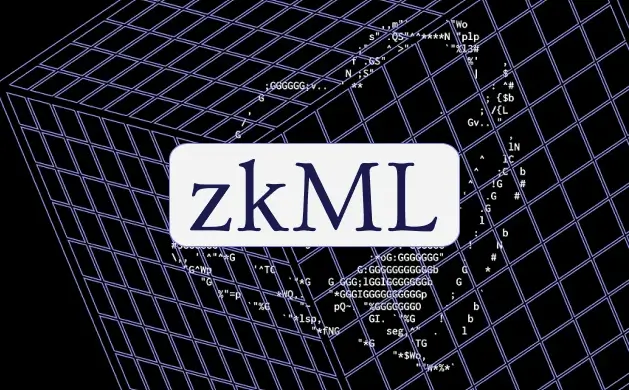
This verification mechanism shifts the trust paradigm in AI. Instead of relying on the honesty of the compute provider, enterprises can cryptographically guarantee that an AI decision was made using a specific, audited model. This is particularly critical in high-stakes sectors like finance, where regulatory compliance requires traceable and verifiable decision-making processes. The ability to prove inference correctness without exposing proprietary algorithms or sensitive customer data creates a new layer of security and trust for AI-driven services.
Enterprise Use Cases and Benefits
ZKML shifts AI verification from a trust-based relationship to a cryptographic guarantee. For enterprises, this solves the "black box" problem where regulators and partners must blindly accept model outputs. By generating a zero-knowledge proof alongside the inference, organizations can demonstrate compliance and correctness without exposing sensitive inputs or proprietary weights.
Financial Compliance and Auditability
In regulated finance, the ability to prove a model adhered to specific constraints is as valuable as the prediction itself. ZKML enables institutions to verify that credit scoring or fraud detection models did not rely on prohibited features, such as protected demographic data. This cryptographic audit trail satisfies rigorous regulatory requirements while keeping customer data private. Traditional cloud inference offers no such proof, leaving firms exposed to compliance risks.
Healthcare Data Privacy
Healthcare providers face strict data governance laws like HIPAA, which limit how patient data can be shared for AI analysis. ZKML allows hospitals to run diagnostic models on encrypted data, ensuring that sensitive medical records never leave the secure enclave in plaintext. The resulting proof verifies the diagnosis was generated correctly by the authorized model, enabling collaborative research without violating patient privacy or data residency laws.
Protecting Proprietary AI IP
For AI developers, intellectual property is the primary asset. In decentralized environments, sharing a model often means risking theft of the underlying architecture or weights. ZKML allows a model owner to provide a service where users can verify the output is authentic without ever seeing the model itself. The proof certifies that the correct, licensed model was used, preventing reverse engineering and ensuring that IP remains protected even in open, decentralized networks.
| Feature | Traditional Cloud Inference | ZKML Inference |
|---|---|---|
| Privacy | Data visible to provider | Data encrypted and hidden |
| IP Protection | Model weights exposed | Weights hidden, proof visible |
| Auditability | Relies on provider logs | Cryptographic proof of execution |
| Trust Model | Trust the provider | Trust the math |
ZKML Token and Market Context
It is important to distinguish the underlying ZKML technology from the ZKML token. The former is a cryptographic framework for verifying AI models; the latter is a speculative digital asset. Market data for the token does not reflect the enterprise adoption rate of the protocol itself.
As of April 2025, the ZKML token trades around $0.0095, according to CoinMarketCap data. This low price point reflects the asset's early-stage status and high volatility rather than the maturity of the zero-knowledge proofs it powers. Investors should view this price action separately from the technical utility of the network.
Common Questions About ZKML
Zero-knowledge machine learning (ZKML) addresses the opacity of AI systems by combining zero-knowledge proofs with machine learning algorithms. This allows enterprises to verify that an AI model was executed correctly without disclosing the underlying computations or data.
No comments yet. Be the first to share your thoughts!