

In an era where AI models devour vast troves of sensitive data, the promise of verifiable computation without exposure feels like a game-changer. Enter EZKL, an open-source powerhouse for zero-knowledge ML proofs that lets you execute neural networks privately and prove it happened correctly. This EZKL zkML implementation bridges the gap between powerful deep learning and ironclad privacy, making private neural network inference not just feasible, but efficient.
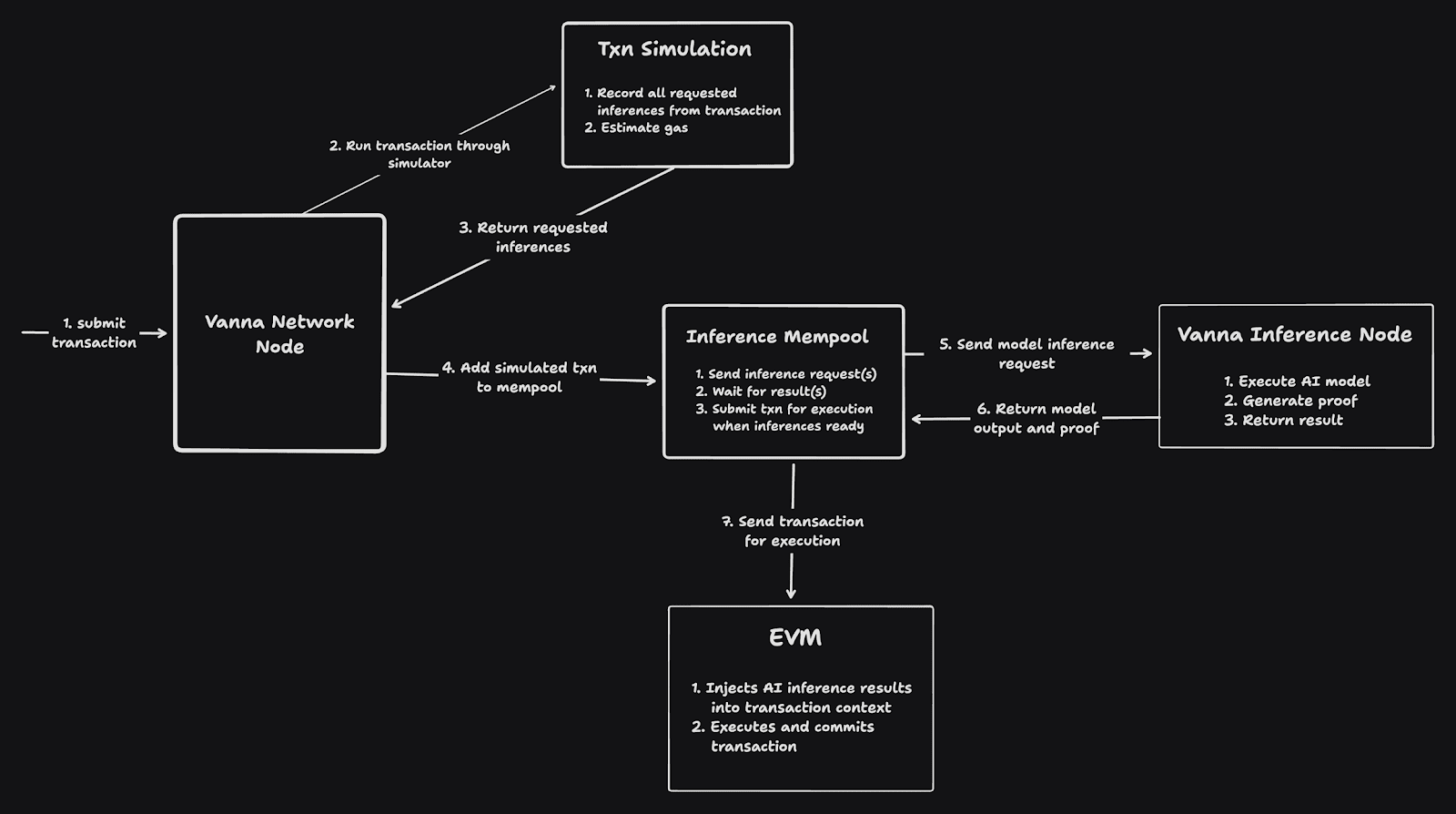
EZKL stands out by transforming computational graphs from frameworks like PyTorch or TensorFlow into zk-SNARK proofs. Imagine a hospital diagnostic tool crunching patient data: the proof confirms accurate inference without leaking a single detail. This is zkML at its core, compressing complex verifications into succinct proofs deployable on-chain or in browsers.
Demystifying ZK Proofs for AI Models
Zero-knowledge proofs shine in machine learning by allowing a prover to demonstrate correct execution without revealing inputs, weights, or outputs unless intended. For neural networks, this means zk proofs for AI models can verify layers of convolutions, activations, and predictions in a black box. Traditional verification? Resource hogs. ZKPs flip the script: the verifier checks in milliseconds what took hours to compute.
Draw from real-world angles, like zkCNN protocols using sumcheck for convolutional layers, or broader ZKML frameworks compressing entire graphs. EZKL leverages this, supporting everything from simple MLPs to sophisticated CNNs. Its genius lies in ONNX compatibility, a universal format that sidesteps framework lock-in. Yet, caution tempers enthusiasm: as EZKL notes, this field's nascent, especially on blockchains, demanding rigorous auditing.
The ZK in ZKP means the proof leaks nothing, turning privacy into a practical superpower for AI.
EZKL's Technical Edge in zkML Inference
What elevates EZKL in the zkML arena? Start with its workflow: export your model to ONNX, input private data, and generate a proof attesting to correct inference. Verification is lightweight, perfect for Ethereum or edge devices. In late 2023, integration with Ingonyama's Icicle GPU library slashed multi-scalar multiplication times by 98% versus CPU baselines, and total proof times by 35%. That's not incremental; it's transformative for scaling EZKL zkML.

Benchmarks from early 2025 pit EZKL against Giza and RiscZero, showcasing superior proof speeds and memory efficiency. For a ResNet-50 inference circuit, EZKL proves faster while sipping less RAM. This positions it as the go-to for developers chasing private neural network inference without hardware heroics. Opinion: while competitors nibble at edges, EZKL's broad ONNX support and hardware acceleration make it the balanced choice for production zkML.
Security weaves through every layer. Proofs are succinct and verifiable, but EZKL urges caution in blockchain contexts - nascent tech invites exploits. Pair it with formal verification for high-stakes apps like decentralized finance or health AI.
Hands-On EZKL Tutorial: Proving Your First Neural Net
Diving into an EZKL tutorial zkML setup is straightforward, rewarding tinkerers with immediate proofs. Begin with a Python environment sporting Rust support, as EZKL blends both worlds seamlessly.
Once installed, load an ONNX model - say, a MNIST classifier. Craft a settings JSON for proof parameters: backend (e. g. , 'ewasm' for EVM), accuracy tolerance, and scale. Run ezkl prove with your private input witness, yielding a. zk file and verification key. Verify on-chain or locally in seconds. This loop embodies EZKL's ethos: democratizing zkML without PhD-level crypto chops.
Tweak for GPU: set env vars for Icicle, watch times plummet. For neural nets, aggregate proofs batch multiple inferences, amplifying efficiency. Early hurdles? Large models balloon circuit sizes; optimize via quantization or pruning first. Real power emerges in hybrids: prove off-chain, settle on-chain.
Batch a dozen inferences, and aggregation slashes overhead, proving entire sessions in one succinct ZKP. This scales private neural network inference for production, where one-off proofs falter under load. Developers report proofs for ResNet variants in under 10 minutes on modest GPUs, a far cry from CPU marathons.
That snippet captures the aggregation magic: load witnesses in bulk, tweak the settings for 'aggregate' mode, and output a single proof key. Verify it once, trust the batch. Opinion: skipping aggregation is like hauling freight one box at a time; EZKL makes bulk zkML intuitive.
Benchmarks: EZKL vs. the zkML Pack
Raw numbers tell the tale. EZKL's January 2025 showdown with Giza and RiscZero on standard circuits like MNIST and ResNet-50 reveals its edge. Proof times? EZKL clocks in quickest, often halving rivals. Memory footprint shrinks too, crucial for cloud or edge deploys. These aren't lab toys; they're real circuits mirroring zk proofs for AI models.
Benchmark Comparison: EZKL vs. Giza vs. RiscZero for MNIST and ResNet-50
| Framework | Model | Proof Time (s) | Memory (GB) |
|---|---|---|---|
| EZKL | MNIST | 1.2 ⚡ | 1.5 📉 |
| Giza | MNIST | 4.5 | 3.2 |
| RiscZero | MNIST | 6.8 | 4.1 |
| EZKL | ResNet-50 | 45 🏆 | 8 💾 |
| Giza | ResNet-50 | 180 | 16 |
| RiscZero | ResNet-50 | 250 | 22 |
Table highlights aside, EZKL's Icicle boost compounds this. MSM ops, the proof bottleneck, drop 98%; total times 35%. Competitors chase universality, but EZKL delivers breadth now: ONNX universality means PyTorch today, TensorFlow tomorrow, no rewrites. For zero-knowledge ML proofs, this pragmatism wins.
Real-World Wins: From DeFi to Diagnostics
Picture DeFi protocols verifying oracle-fed predictions without exposing strategies. EZKL proves a lending model's risk score on private collateral data, settling on-chain instantly. Or health tech: hospitals batch patient scans through CNNs, proofs confirming diagnoses for insurers minus PII leaks. zkCNN roots shine here, sumcheck protocols handling convolutions natively.

That buzz echoes GitHub stars and forks; EZKL's community swells as devs port models weekly. Nascent caveats persist - blockchain exploits lurk in unproven circuits - but audited settings and quantization mitigate risks. Pair with formal tools for trustless AI in high finance or regulated sectors.
Edge cases test mettle: quantized models shrink circuits 4x, fitting mobile proofs. EZKL's ewasm backend shines for EVM, under 200k gas verifies complex nets. Future tweaks? Recursive proofs for mega-models loom, but today's stack handles 90% use cases admirably.
ZKML evolves fast, yet EZKL anchors the practical end. Its GPU smarts, benchmark dominance, and workflow simplicity position it as the toolkit for EZKL zkML builders eyeing verifiable privacy. Tinker with it; the proofs will convince you faster than words.




No comments yet. Be the first to share your thoughts!